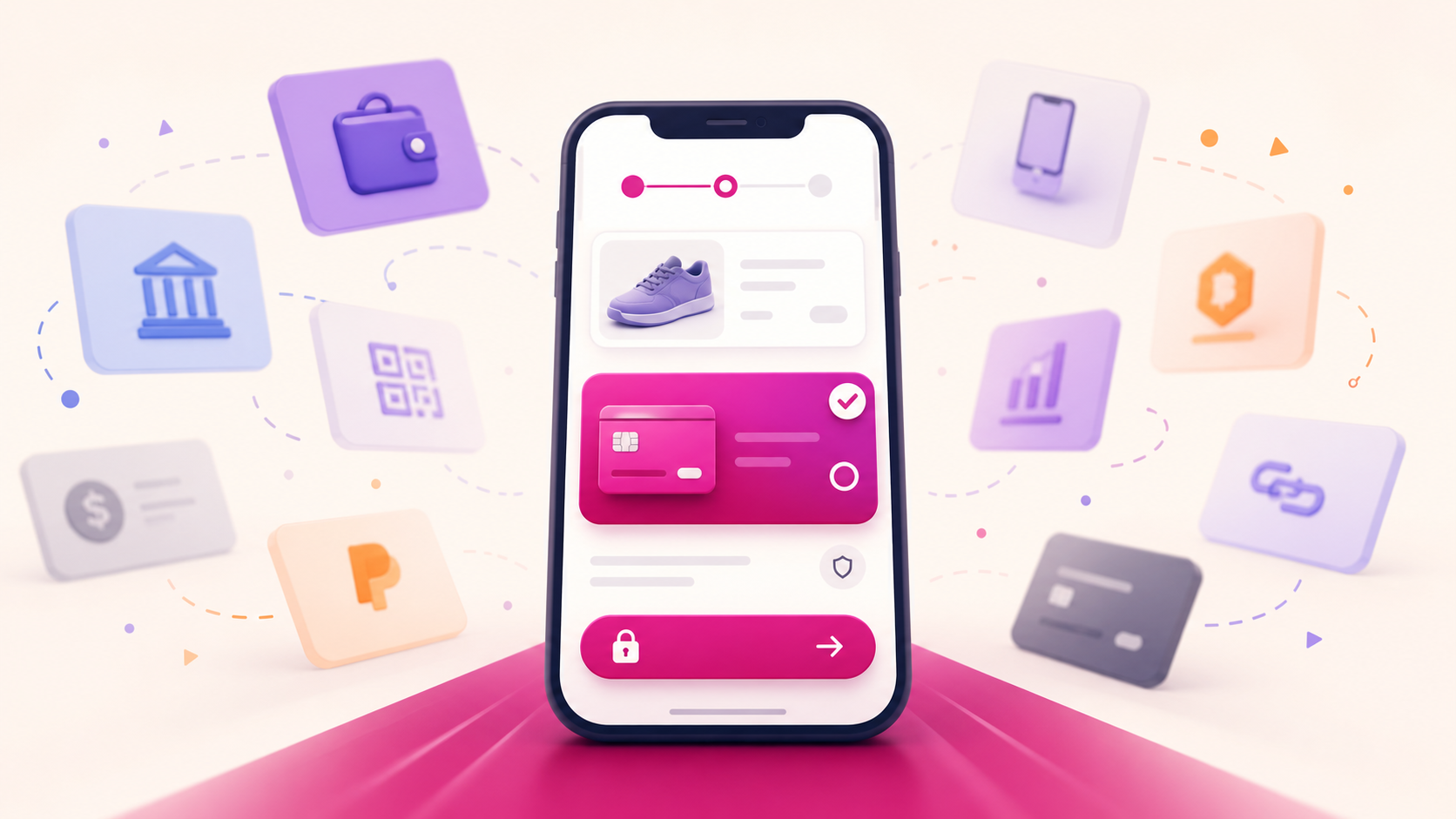
It is tempting to think that more options always create a better product. More payment methods. More ways to solve a problem. More paths for customers to choose from.
But in a conversion-critical moment, choice is not automatically helpful. Every additional option asks a user to pause, compare, predict an outcome, and make another decision. When the user is already trying to complete an urgent task, that extra cognitive work can become friction.
Choice is only useful when it is actionable
Good product design gives people meaningful control. That does not mean exposing every possible system capability at every moment. An option is only useful if a customer can understand it, use it successfully, and return to their original goal without creating a new problem.
In payment flows, this matters even more. People may be short on time, worried about money, or unsure why a particular method is unavailable. The experience should reduce uncertainty, not introduce a parallel task.
A familiar payment trade-off
Consider a purchase flow where customers can pay directly from account credit. Showing the remaining credit seems like an obvious improvement: it could make the decision more transparent and explain whether the available balance is sufficient.
However, real products have technical constraints. A real-time credit check may require an additional backend call, slow a sensitive payment flow, or be unavailable for some account types. The product team has to decide which risk matters most at that moment.
The best option is not always the one that gives users more to do. Often, it is the one that helps them complete their original task with less uncertainty.
When a helpful action becomes a detour
One proposed solution might be to show an “Increase Credit” action whenever a customer's balance is insufficient. On paper, it creates a clear escape route. In reality, it can pull people out of checkout and into a separate financial flow.
For a postpaid customer, that detour might mean settling a bill through a bank gateway, waiting for the transaction to process, and then repeating the original purchase flow. What began as a helpful option becomes a multi-step interruption.
- The original purchase is no longer the user's only task
- The chance of abandonment increases with every extra step
- The customer has to remember why they left and how to return
- The product creates more operational and emotional friction at the exact point where confidence matters most
Design for completion, not feature visibility
In this kind of situation, removing the extra action can be the more user-centered choice. Keeping the payment flow focused on one uninterrupted transaction may protect completion rate better than displaying every available possibility.
This does not mean hiding important information. It means being deliberate about where information and actions belong. A user should understand why a method is unavailable, but they do not always need an invitation to begin another journey from inside checkout.
Questions to ask before adding another option
- Does this option help the user complete their current goal?
- Can the user act on it successfully right now?
- Does it create a detour into another flow?
- What happens if the user leaves this task halfway through?
- Is the information clear enough to reduce uncertainty?
- Could the same problem be solved earlier in the journey?
The value of deliberate constraint
Product design is not only about making more things available. It is about deciding what to prioritize, what to postpone, and what to leave out when leaving it in would harm the experience.
Sometimes the most valuable decision is not adding another button. It is protecting the user from an unnecessary decision at the moment they are most likely to abandon the task.