Background & Context
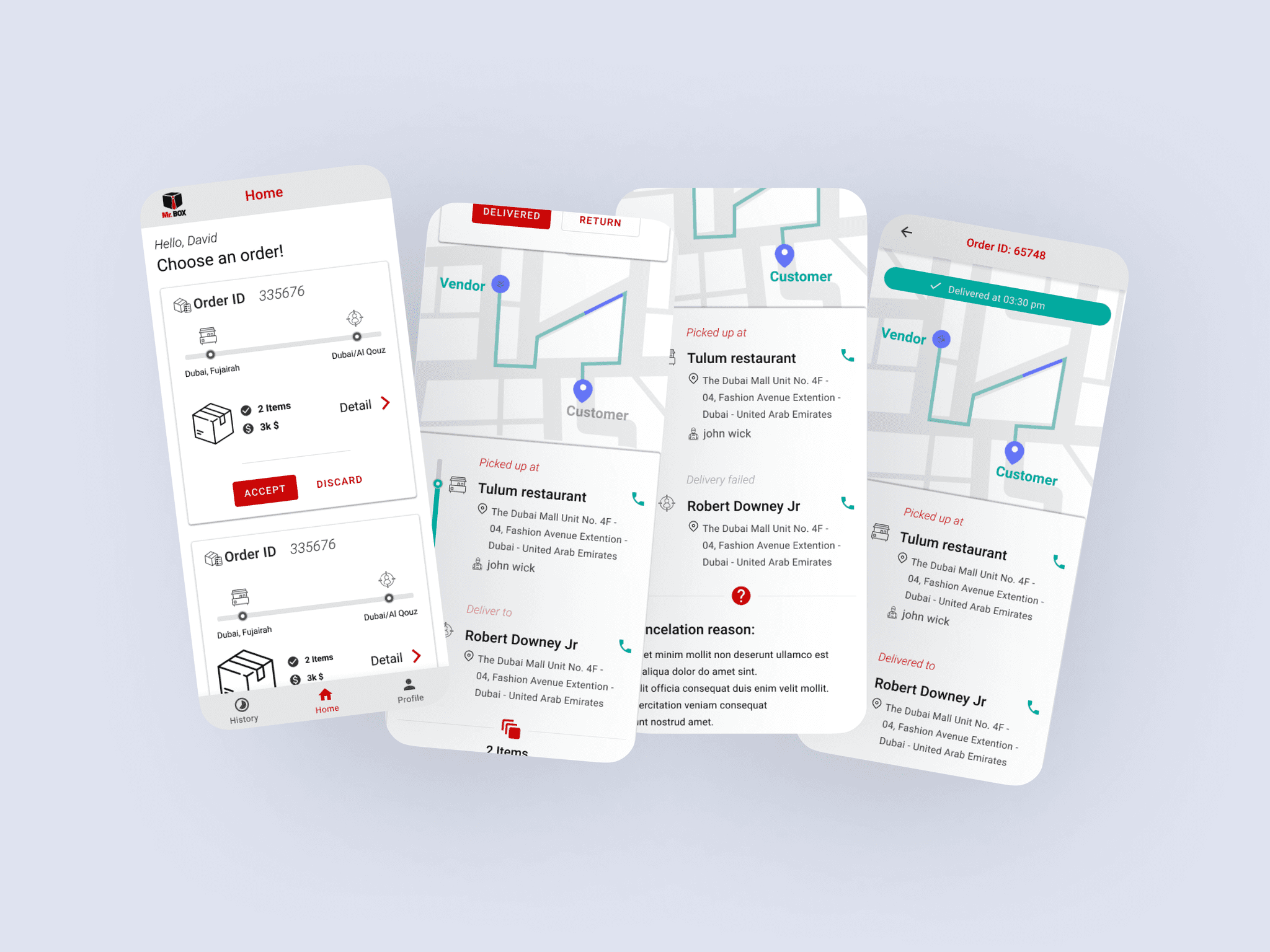
Mr. Box is a Dubai-based food-delivery platform designed to simplify ordering while helping vendors manage incoming orders efficiently.
The challenge was to create a lightweight, mobile-first experience enabling customers to discover food, place orders, and track deliveries effortlessly, while providing vendors with a fast operational workflow.
My Role
As Product Designer, I focused on simplifying a two-sided delivery experience by reducing friction in core customer and vendor workflows, improving decision speed, and optimizing mobile usability.
Problems solved
- Reduced complexity in the customer ordering flow
- Improved vendor status visibility and actionable information
- Minimized information overload around critical actions
- Streamlined end-to-end flows on both sides of the marketplace
Impact
- Fewer steps and improved task-completion efficiency
- Lower decision time through clearer hierarchy
- Faster vendor order processing
- Reduced cognitive load and improved mobile usability
Understanding the Problem
Designing for operational speed
Delivery drivers operate under time-sensitive conditions and make quick decisions while moving between vendors and customers. Existing workflows required too many actions, offered limited order-status visibility, and handled cancellations and returns unclearly.
The goal was a streamlined experience that let drivers manage orders efficiently, track progress clearly, and complete deliveries with confidence.
Research & Discovery
We reviewed existing delivery products and common industry patterns, focusing on restaurant discovery, ordering decisions, checkout expectations, tracking, vendor workflows, and mobile performance.
Competitor analysis
Benchmarks included Talabat, Deliveroo, Careem, and Uber Eats.
Insights
- Drivers need immediate visibility of the next required action.
- Delivery status should always remain visible.
- Maps and location details are referenced most frequently.
- Cancellation and return flows need structure.
- Drivers prefer completing tasks from one screen.
Defining the Experience
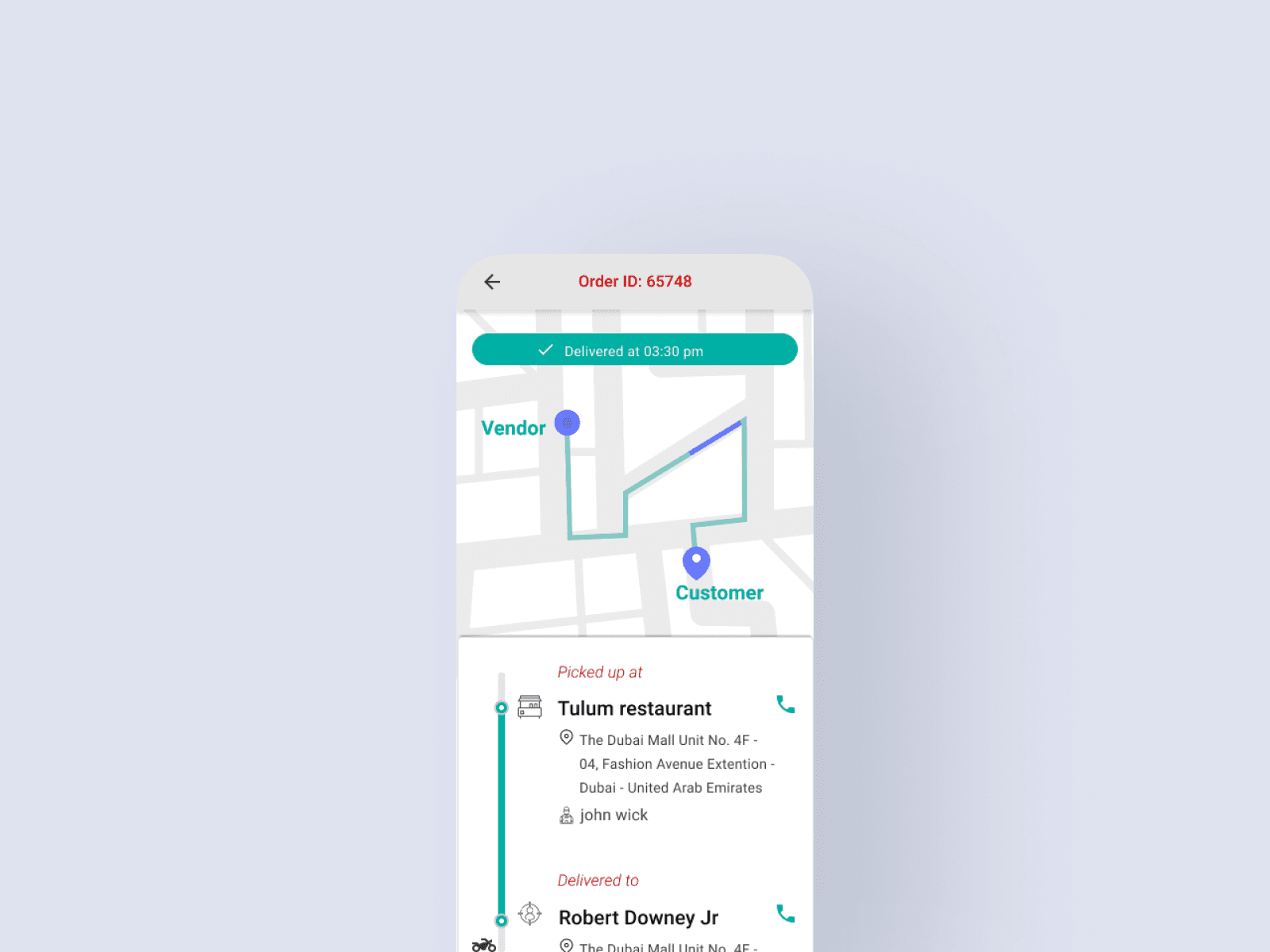
The delivery experience centered on reducing cognitive load and helping drivers focus on completing deliveries. It supported the journey from order acceptance to final handoff while maintaining visibility, control, and flexibility.
Information Architecture
The architecture was structured around the most frequent user actions rather than the product’s internal organization.
Ideation & Exploration
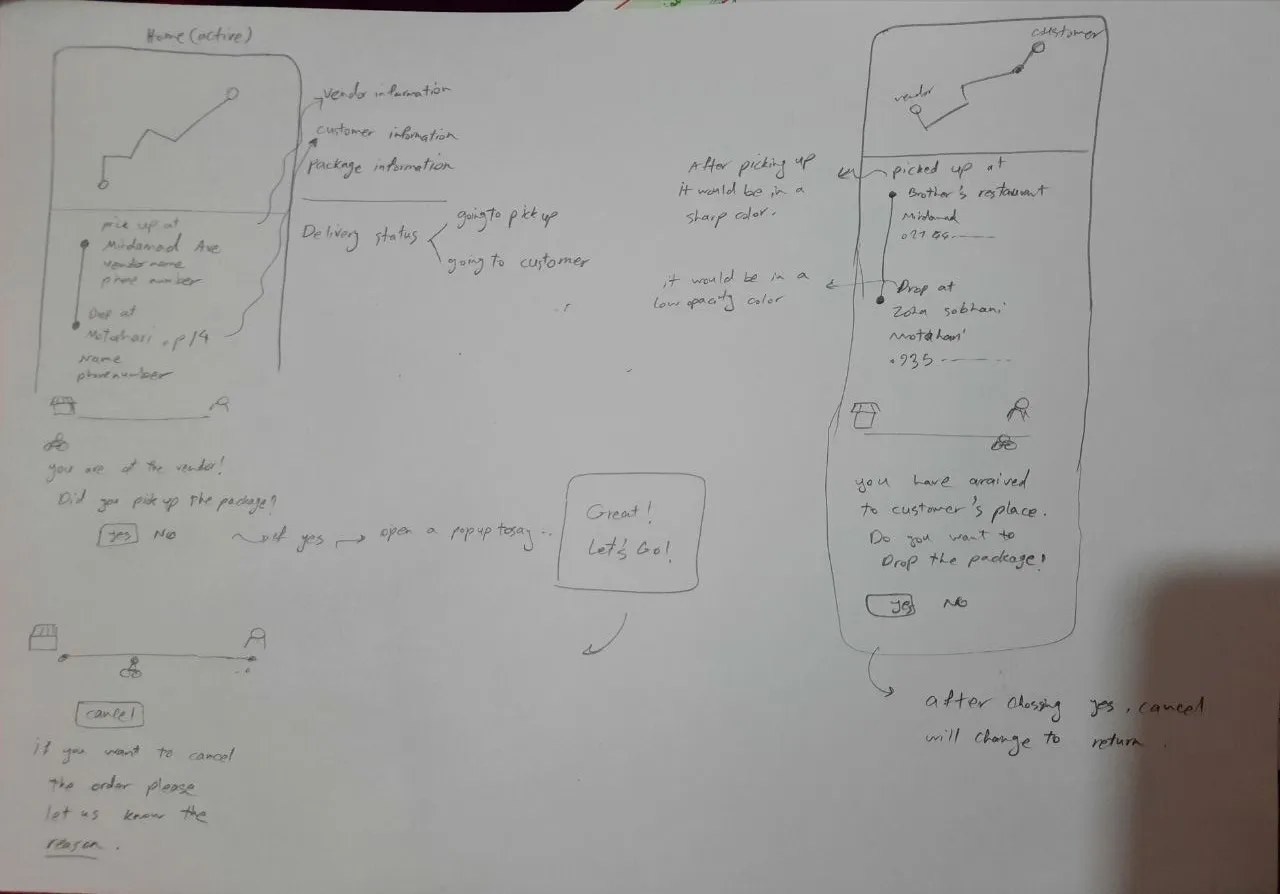
We evaluated multiple concepts through collaborative workshops, sketching, and rapid design explorations. Several navigation structures and interaction patterns were tested before selecting a direction, helping simplify flows without removing critical functionality.
Testing & Iteration
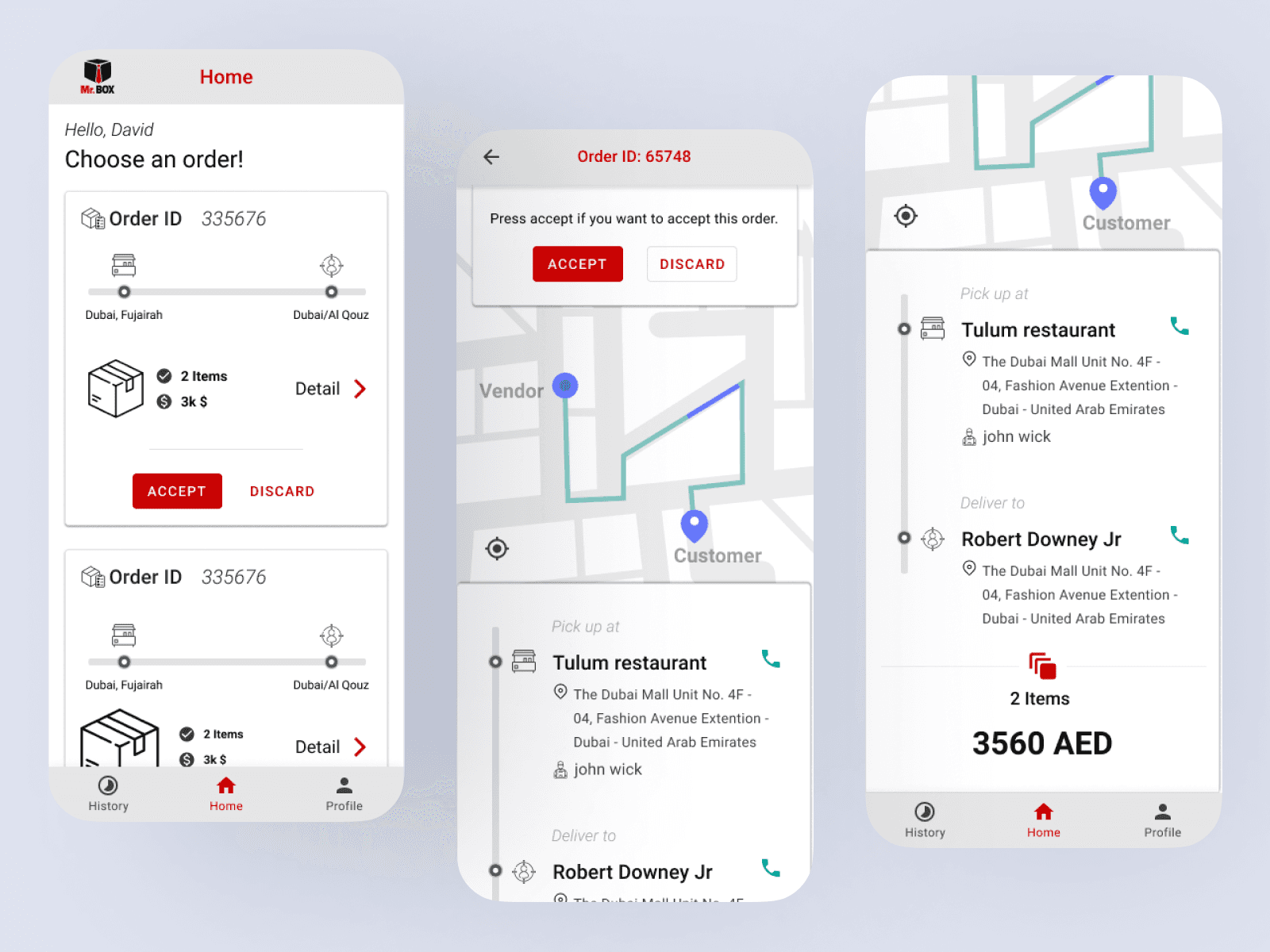
Participants used interactive prototypes to accept orders, navigate to pickup, mark pickup, complete delivery, and cancel or return an order.
Clearer progress
Some participants could not locate themselves in the delivery journey, so a status-based workflow was introduced.
More visible actions
Accept, Picked Up, and Delivered were given stronger visual prominence and consistent placement.
Structured exceptions
Dedicated cancellation and return flows were added, including mandatory reason collection.
Persistent location information
Vendor and customer details remained visible throughout the journey.
Outcome
The final experience transformed a complex operational process into a structured workflow. Contextual actions, real-time status visibility, and simplified navigation let drivers focus on deliveries rather than managing the interface.
- Reduced decision-making effort
- Improved visibility of order progress
- Faster access to critical actions
- Transparent cancellation and return handling
- Greater confidence throughout delivery
Reflection
Designing for logistics means designing for speed, clarity, and real-world constraints. Small decisions—like primary-action placement or status visibility—can significantly affect operational efficiency.
Future exploration would cover real-time notifications, route optimization, performance analytics, driver earnings, and offline or low-connectivity scenarios.